
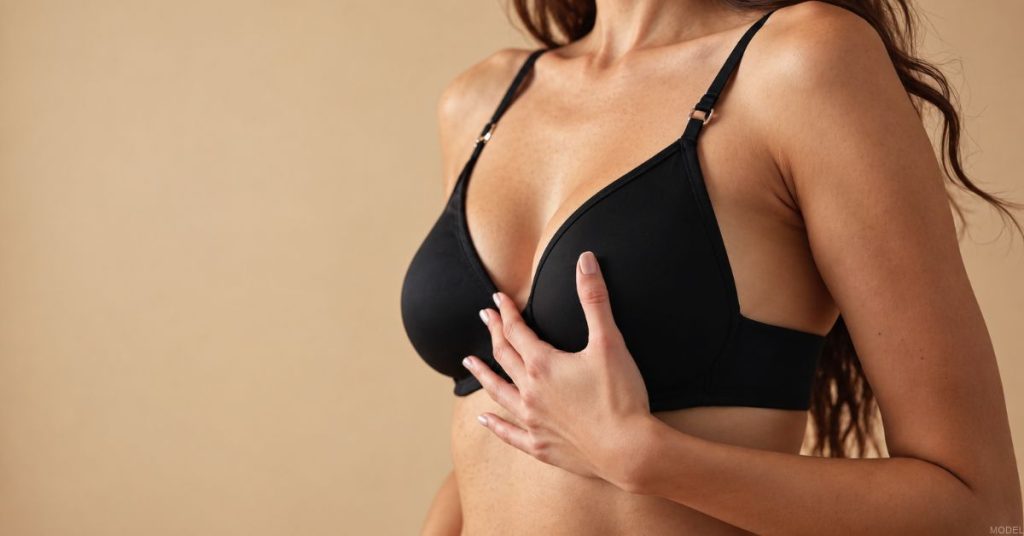
Three days after breast augmentation, you may be sore, swollen, tired, and unsure of what counts as normal. Many of those concerns are expected, but a few deserve a call to our office. Below, I cover how these early days of recovery feel, how to sleep and move comfortably, when to reach out to your plastic surgeon, and what you can expect in the weeks ahead.
WARNING:
This feature contains nudity. Please click OK to confirm you are at least 18 years of age and are not offended by such material.


What Does Day 3 After Breast Augmentation Feel Like?
Your chest may feel sore and heavy, with a tight, stretched feeling as your body adjusts to the implants. Swelling typically reaches its peak by day 3, and bruising may spread or darken. Your body is putting its energy into healing, so it’s normal to feel fatigued.
Your mood can dip, too. Feeling doubtful or teary does not mean you made the wrong choice; those emotional ups and downs are part of early recovery, especially as your implants will feel firmer and sit higher than they will after the “drop and fluff” process.
Is Swelling After Breast Augmentation Normal?
Yes, puffiness and tightness are normal after breast augmentation. You may notice some mild breast asymmetry, as swelling may resolve at different rates on each side. Early, visible swelling will gradually fade over the first few weeks, with residual swelling persisting for several months.
As the swelling settles, your implants should soften and feel closer to natural breast tissue. Firmness that persists or increases after that point warrants a call to our office, since it can sometimes signal a complication such as capsular contracture.
How Should You Sleep in the First Week After Breast Augmentation?
Lie on your back with your upper body propped up. Some patients find that sleeping in a recliner is helpful, while others are most comfortable with a wedge pillow. Be sure to avoid sleeping on your side or stomach until I clear you, usually after several weeks.
If back sleeping is new to you, practicing before surgery can help make the transition easier. For more advice on sleeping after breast augmentation, our sleep guide is a helpful resource.
What Should You Do in the First Few Days After Breast Augmentation?
Keep moving gently, rest often, and follow your surgeon’s instructions closely, including wearing your surgical bra as directed, taking your medication on schedule, and drinking plenty of fluids. I recommend taking short, frequent walks as soon as possible after surgery to help support circulation and ease stiffness during your early recovery.
When it comes to exercising after breast augmentation, you’ll need to take it easy and gradually ease back into your normal routines. Avoid lifting anything heavier than 10 pounds, pushing, pulling, or raising your arms higher than shoulder level. Your surgeon will let you know when you’re cleared to resume more strenuous activity.
Which Symptoms After Breast Augmentation Are Normal, and Which Aren’t?
Discomfort that holds steady or slowly eases is expected, while anything that suddenly intensifies deserves a call. Rapidly growing swelling or pain, especially on one side, can indicate a hematoma, a collection of blood that needs prompt attention.
Call our office right away if something feels off, even if it is not on the list below. Calf pain or swelling, chest pain, or trouble breathing may be signs of a blood clot, which necessitates immediate medical attention.
Understanding Breast Augmentation Symptoms
| Symptom | What’s Expected | When To Call Our Office |
| Swelling | Tight, puffy chest that holds steady or slowly eases | Swelling that grows quickly or is much larger on one side |
| Bruising | Purple, blue, or yellow-green color that spreads toward the ribs | Dark, firm bruising with rising pain on one side |
| Pain | Soreness that prescribed medication controls | Severe pain that medication does not relieve |
| Drainage | Light pink fluid on dressings; thin, slowing drain output | Bright red blood soaking dressings; cloudy or foul-smelling fluid; sudden jump in drain output |
| Fever | Mild warmth; temperature below 100.4°F | Temperature of 100.4°F or higher, or chills |
| Asymmetry | Breasts that differ slightly in size, height, or shape | Sudden size or shape change on one side with pain or tightness |
| Breast firmness | Firm, high-sitting implants from swelling | Firmness that increases quickly, or one breast turning very hard and painful |
What Comes Next in the Breast Augmentation Recovery Timeline?
Breast augmentation recovery unfolds in stages: soreness eases first, energy returns next, and your final shape takes the longest to settle. Everyone heals at their own rate, but they can typically expect the following stages.
What To Expect During Breast Augmentation Recovery
| Time Frame | What You’ll See | What To Do |
| Day 1 | Soreness, tightness, grogginess | Rest, take medication on schedule, and walk short distances |
| Days 2–3 | Swelling peaks, bruising spreads | Continue gentle walks, sleep propped up, wear your surgical bra |
| Days 4–7 | Swelling and soreness begin to ease | Continue light activity; return to desk work around days 5–7 |
| Week 2 | Bruising fades, tightness softens | Add light cardio and short trips if cleared |
| Weeks 3–4 | Implants begin to look more natural | Attend follow-ups; ask when to resume side sleeping |
| Weeks 5–6 | Firmness eases, shape continues to settle | Return to your normal routine if cleared |
Take the Next Step
To explore your breast enhancement options, request a consultation or call South Bay Plastic Surgeons at (310) 784-0644.
Leave a Reply