
Is Preservé Breast Augmentation Worth It? What Patients Want To Know
MOTIVA® Preservé® breast augmentation may be worth considering if you are planning your first breast surgery,…
South Bay Plastic Surgeons
3640 Lomita Boulevard #306
Torrance, CA 90505
Phone: (310) 784-0644
Monday-Friday: 9 a.m.–5 p.m.
The Spa at South Bay Plastic Surgeons
3640 Lomita Boulevard #309
Torrance, CA 90505
Phone: (310) 784-0670
Monday-Friday: 9 a.m.–6 p.m.
Wednesday: 9 a.m.–8 p.m.
Saturday: 9 a.m.–4 p.m.
Sunday: Closed
We offer fat transfer breast augmentation in Torrance for women from Los Angeles and the nearby communities of Manhattan Beach, Redondo Beach, and Long Beach. This type of procedure is well-suited for those who want to take a softer approach to breast augmentation while still achieving a noticeable change.
Request a ConsultationEach patient comes to our practice with a unique set of concerns and aesthetic goals. Therefore, it’s impossible to say that one approach to breast augmentation is superior to another. However, breast augmentation with fat transfer may be an appropriate option if you’d like a subtler improvement. Most patients using fat transfer can anticipate an increase of approximately 1 cup size.
Because the procedure uses your own fat, most people tolerate this type of breast augmentation quite well, and the procedure has a low incidence of complications. The fat used during the procedure is removed via liposuction, which means that your donor area (typically the abdomen or thighs) can be sculpted at the same time. Breast augmentation with fat transfer also uses very small incisions, typically no more than the width of a fingernail. Small incisions mean small scars, and that’s something that all patients love.
While fat transfer and breast implants are both effective breast enhancement procedures, they are suited to different goals. This side-by-side comparison highlights some of the key differences to help you understand your options.
| Consideration | Fat Transfer | Breast Implants |
| Candidacy | Women who want a subtle increase in breast volume, have a sufficient amount of excess fat, and are willing to have multiple sessions if needed. | Women who want a subtle to significant increase in breast volume with a single surgery and recovery. |
| Cost (relative)* | Similar or less expensive. Multiple sessions increase the total cost. | Similar or more expensive. |
| Incision placement | Tiny incisions in liposuctioned areas plus small injection sites on the breasts. | Thin incisions along the breast crease, around the areola, or in the armpit. |
| Potential size difference | Typically up to one cup size per session. Larger increases may require multiple procedures. | One to multiple cup sizes with different shape and profile options. |
| Recovery time | Return to work, school, and nonstrenuous activities in about 7 to 10 days. Involves multiple surgical sites (breasts and donor areas). | Return to work, school, and nonstrenuous activities in about 5 to 7 days. |
| Look and feel of results | Soft, natural look and feel. | Predictable size and shape can look very natural with appropriately selected implant size and profile. Silicone implants provide a soft, natural feel. |
*See our Pricing page for general price ranges.
Fat transfer is an outpatient procedure that begins with liposuction. Depending on how much fat is removed, your procedure may be performed while you are under general anesthesia or simply using local anesthesia with sedation. During the procedure, your physician makes a series of several small incisions at your donor site. The surgeon then uses liposuction to remove enough fat to reach your goals and create a proportionate result.
The donor fat is purified using a special process that isolates the fat cells from blood and other impurities. The surgeon then uses a needle to inject the donor fat cells into your breasts, meticulously sculpting a natural-looking shape and evaluating the results for symmetry. After a brief period of observation, you’re able to return home the same day in the care of a friend or family member.

Unlike traditional breast augmentation, your breasts won’t be bandaged or dressed after your fat transfer procedure, so you’ll be able to observe your results immediately. Bruising and swelling are common and typically go away within 2 weeks. Depending on the amount of fat taken from your donor area, you may need to wear a compression garment to support your body and minimize swelling. You may need several treatments to reach your desired results, but the effect is natural and can be long-lasting.
The transferred fat cells that establish a blood supply can last indefinitely fluctuating with significant weight changes, pregnancy, and aging. The fat that does not survive is absorbed over the first few months, so the initial fullness will decrease as the results stabilize.
A single fat transfer procedure can be enough for a subtle increase in breast volume, to enhance implant results, or to correct mild asymmetry, depending on your desired results, how much fat survives, and other individual factors. Our surgeons limit the amount of fat they transfer per procedure for optimal safety and survival of the transferred fat.
Fat transfer generally does not impact breastfeeding because breast tissue and milk glands are not cut. Let your plastic surgeon know if you hope to breastfeed in the future, so it can be considered when planning your surgery.
Yes. Fat transfer can produce benign changes that may appear on breast imaging, so it’s important to let the imaging center know you had the procedure. While radiologists are typically experienced in recognizing these changes, they may request additional imaging or a biopsy. Your plastic surgeon, OB-GYN, or general practitioner may recommend a baseline mammogram before your fat transfer procedure for future comparison.
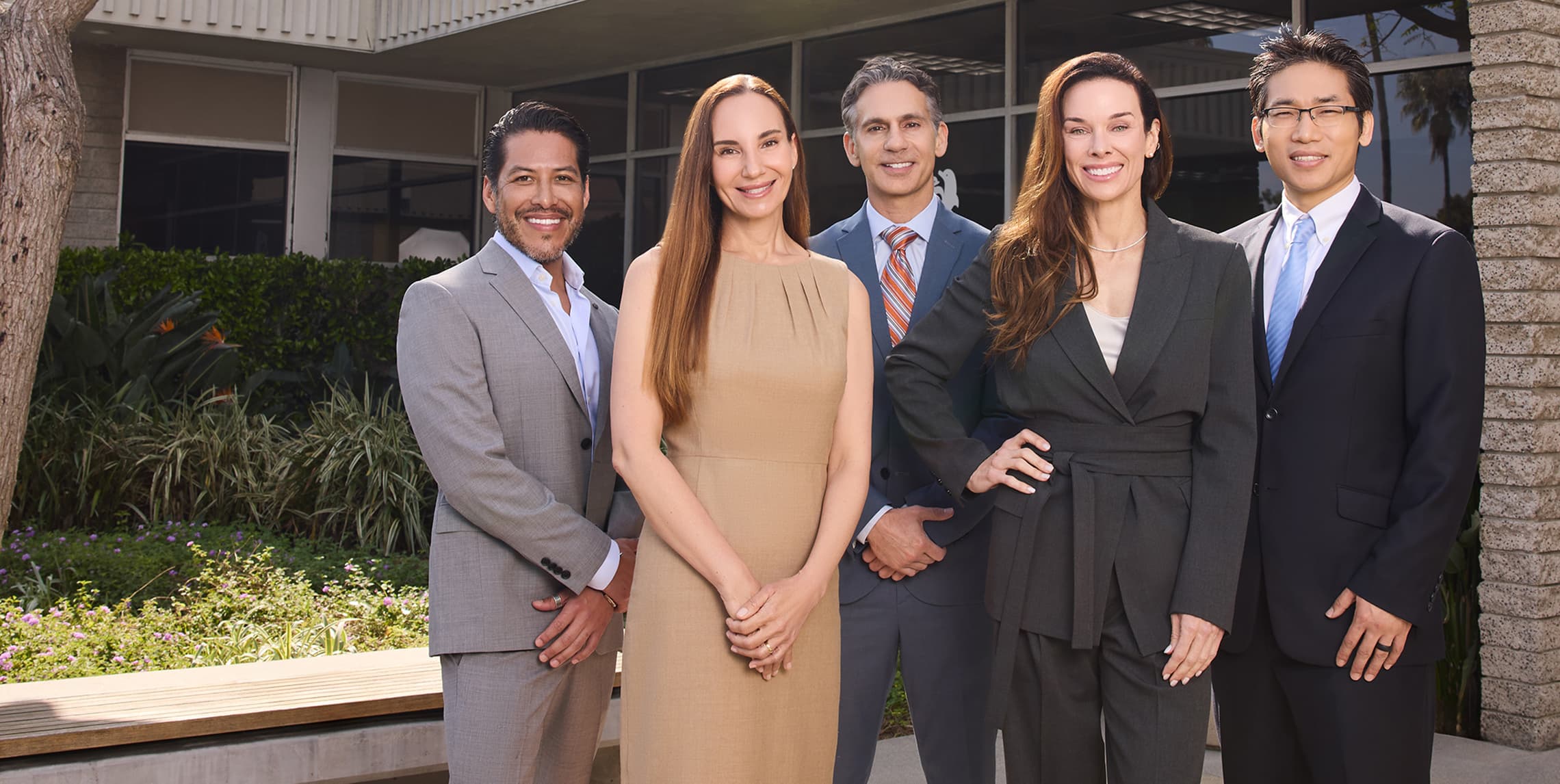
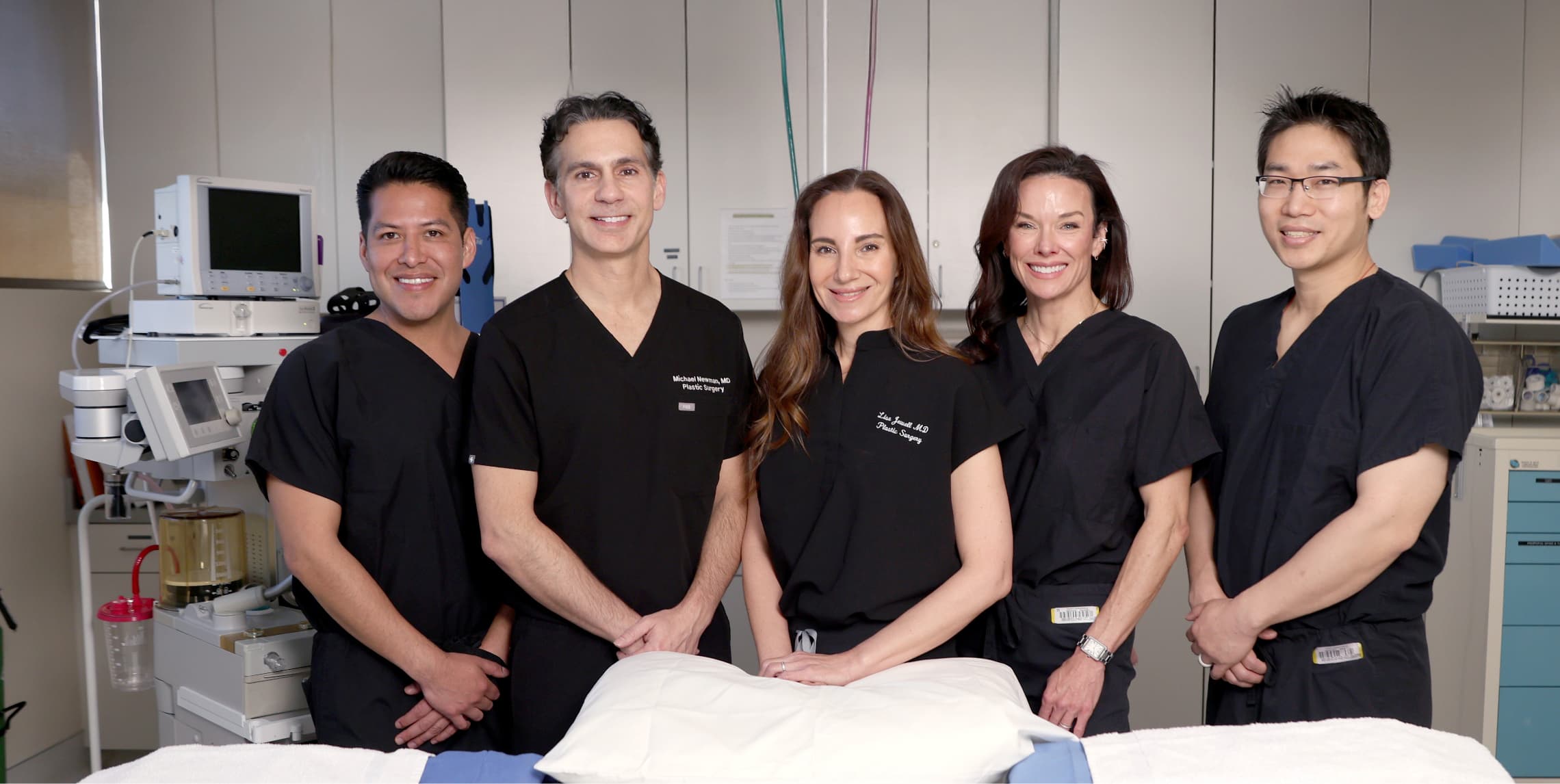
To learn more about breast augmentation at fat transfer at our Torrance practice, request your consultation online or call (310) 784-0644 to book your appointment with the help of a staff member.
Request A ConsultationMOTIVA® Preservé® breast augmentation may be worth considering if you are planning your first breast surgery,…
One of the most notable breast implant trends we're seeing today at South Bay Plastic Surgeons…
Reality star and cosmetics mogul Kylie Jenner recently confirmed the exact details of her latest breast…